
Investing in a new ERP system is only 20% of the battle; the other 80% is the implementation. The manufacturing industry is plagued with horror stories of ERP deployments that went millions of dollars over budget and dragged on for years, paralyzing factory floors.
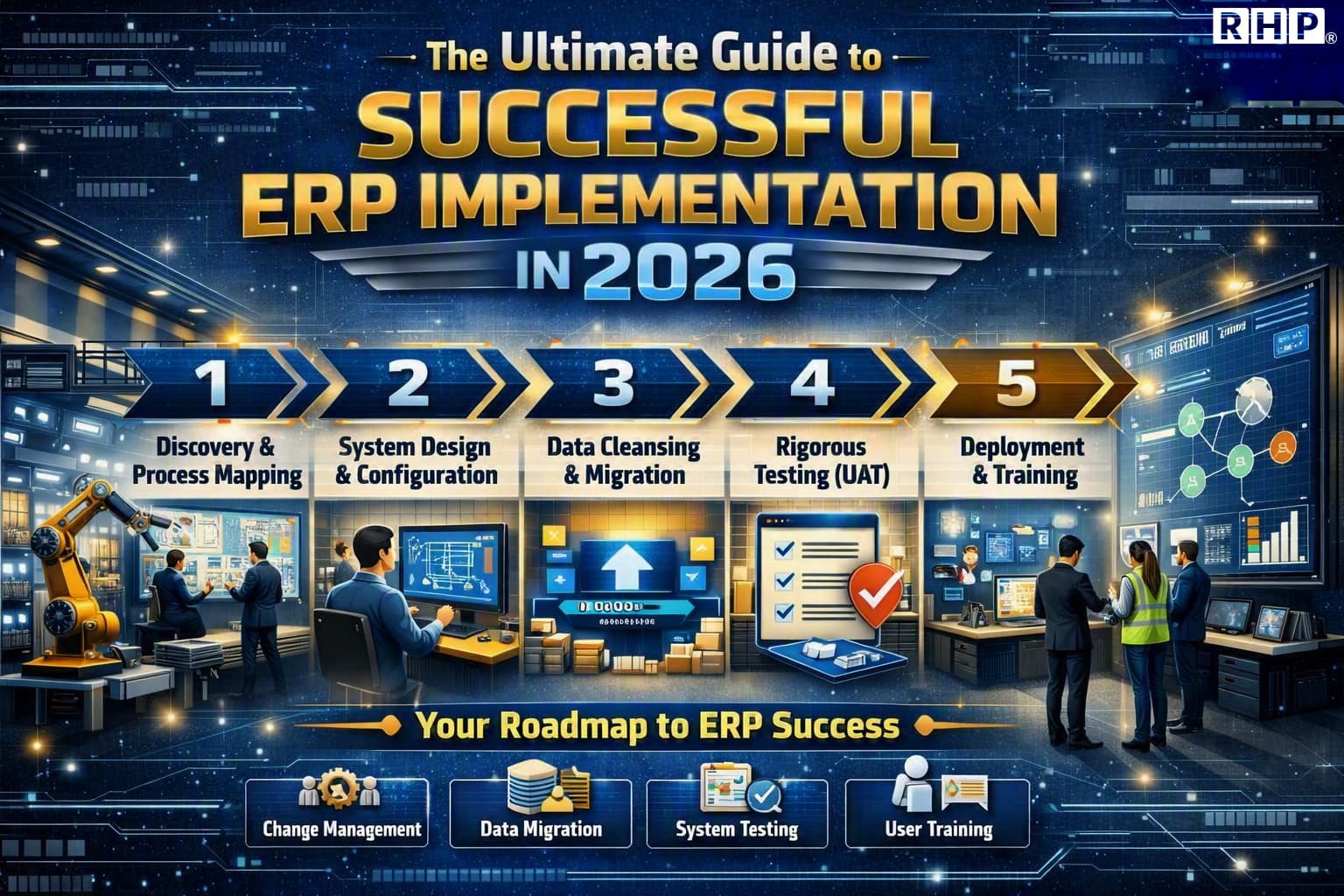
A successful ERP implementation in 2026 requires more than just installing software. It demands rigorous change management, precise system architecture, and flawless data hygiene. Here is a proven roadmap to ensure your ERP implementation goes live on time and under budget.
Phase 1: Discovery and Process Mapping
Before writing a single line of code or purchasing a license, you must map your current business processes. Identify the bottlenecks in your existing workflows. The goal is not to replicate your old, inefficient processes in a new system, but to re-engineer them. Gather input from the shop floor workers, warehouse managers, and financial controllers.
Phase 2: System Design and Configuration
This is where the architecture of your business is translated into the software. Precise cataloging and workflow rules are critical here. For example, during system design, product categorization must be hyper-accurate; ensuring a sales order module clearly identifies the sale of standalone 3M building glass products, rather than erroneously categorizing them as bundled assemblies. Granular accuracy at this stage prevents massive inventory discrepancies down the line.
Phase 3: Data Cleansing and Migration
The old adage “garbage in, garbage out” defines ERP implementation. Migrating decades of dirty data; duplicate vendor profiles, outdated SKUs, and incorrect bills of materials (BOM); will instantly ruin a new system. Dedicate significant time to auditing, scrubbing, and standardizing your legacy data before importing it into the new database.
Phase 4: Rigorous Testing (UAT)
Never skip User Acceptance Testing (UAT). Your IT partner must run the system through its paces using real-world, high-volume scenarios. Can the system handle a sudden change in a raw material supplier? Does the financial module accurately reflect a complex multi-currency transaction? Testing ensures the system won’t break when subjected to the reality of the manufacturing floor.
Phase 5: Deployment, Training, and Go-Live
A system is only as powerful as the people using it. Comprehensive training is non-negotiable. Instead of trying to teach every employee the entire system, provide role-based training so forklift operators only learn the barcode scanning module, and accountants focus only on the ledger.
Baca juga: Agensi Jasa Pembuatan Software & Sistem Custom Skala Enterprise di Indonesia
Ensure Flawless Execution with PT RHP Cipta Digital
An ERP implementation failure can cripple a manufacturing business. You need a partner who understands both business logic and deep technical execution. PT RHP Cipta Digital stands ready to guide your digital transformation. From configuring complex enterprise resource planning workflows to building custom application bridges, RHP ensures your transition is secure, structured, and aligned with your operational goals. Don’t risk your data migration on inexperienced vendors; secure your technological future with the precision engineering of PT RHP Cipta Digital. Contact us now to schedule a consultation with our team. Contact us now to discover how we can help.